As healthcare systems continue to be a subject of discussion, modifications in policy will remain on the horizon. St. George's University (SGU) is dedicated to notifying the medical community and consumers of the nature of medical development and how it impacts their lives (how much is health care). Keep yourself informed about industry patterns in health care by following our blog,.
The idea of "complimentary healthcare" appears to have actually gotten cult-like status in Canada. This is difficult considered that provincial/territorial federal government spending on health care (including federal transfers) represented 7. 1 percent ($ 141 billion) of the Canadian economy in 2014 - what is universal health care. And yet, time and once again, people promote the zero dollar price-tag.
First, specific Canadians are not exposed to any part of the expense of fundamental doctor and health center services, at the point of use. Instead, they every year pay a substantial quantity of cash for health-care products and services through taxes. While (primarily or partially) tax-funded whippet addiction health-care systems are not uncommon, the lack of any deductibles and copayments puts Canada in an extremely little minority among universal health-care systems.
Even specific health premiums in provinces such as British Columbia and Ontario enter into basic federal government profits. This makes it difficult for Canadians to compute just how much of their total tax payments go towards health care every year. Without such a basic piece of information, conversations about the performance and sustainability of our health-care system routinely devolve into emotional grandstanding.
We approximate that the typical Canadian family (two parents, 2 children) making $119,082 will pay $11,735 for public health-care insurance coverage in 2015. On the other hand, a single private making $42,244 will pay $4,222. As one would anticipate, there's an excellent offer of variation in the quantity paid for healthcare by http://zionrmpe149.timeforchangecounselling.com/some-known-factual-statements-about-a-health-care-professional-is-caring-for-a-patient-who-is-about-to-begin-iron-dextran households making different levels of income.
How What Is Required In The Florida Employee Health Care Access Act? can Save You Time, Stress, and Money.
And what about boost? Looking back over the last years, we estimate that the cost of public health-care insurance coverage for the average Canadian household grew 1. 6 times faster than the average earnings in between 2005 and 2015. While increases have been less drastic over the last few years, this recommends that we have long been on an economically unsustainable course.
While Canadians routinely experience the excellent and bad of our health care system, it can be difficult to determine those experiences versus their yearly contributions to the system due to the fact that of the dirty way in which it is moneyed. At least, our estimates supply us with an essential suggestion that Canada's health-care system is not "free.".
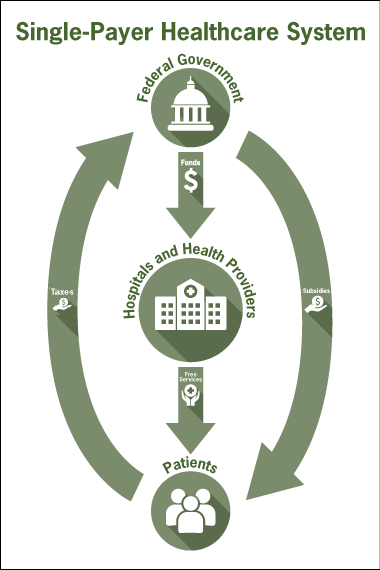
All Americans, no matter political celebration, want access to prompt, premium health care. The concern is how to arrive. Do we harness the power and innovation of the private sector, or do we commend the federal government and expect the very best? Canada has actually chosen the latter route, and at one of the most recent debates amongst Democratic presidential candidates, Bernie Sanders once again promoted its government-run healthcare system as a design for America.
No more out-of-pocket costs? In reality, Canadians' out-of-pocket health costs are nearly identical to what Americans paya difference of roughly $15 each month. In return, Canadians pay up to 50% more in taxes than Americans, with government health costs alone representing $9,000 in extra taxes per year. This pertains to roughly $50 in additional taxes per dollar saved in out-of-pocket costs.
As an outcome, public health spending in Canada accounts for only 70% of total health costs. In contrast, Medicare for All propositions assure 100% coverage. This recommends the monetary concerns on Americans, and distortions to care, would be far greater than what Canadians already suffer. Canada's minimal coverage may shock Americans, however the secret is understanding what "universal" means in "universal care." Universal systems suggest everybody is required to join the public system.
Get This Report on What Is Single-payer Health Care
Undoubtedly, out-of-pocket costs are in fact substantially higher in Sweden, Denmark and Norway than they are in America. More serious than the monetary concerns is what happens to quality of care in a government-run system. Canada's total health expenses have to do with one-third cheaper than the U.S. as a percent of GDP, however this is accomplished by unfavorable cost-control practices.
The system likewise cuts corners by utilizing older and cheaper drugs and stinting contemporary devices. Canada today has fewer MRI units per capita than Turkey or Latvia. Furthermore, underinvestment in centers and personnel has actually reached the point where Canadians are being dealt with in medical facility corridors. Naturally, Canada's emergency clinic are packed.
Seeing a specialist can take a shockingly long period of time. which type of health care facility employs the most people in the u.s.?. One doctor in Ontario called in a referral for Look at this website a neurologist and was informed there was a four-and-a-half year waiting list. A 16-year-old young boy in British Columbia waited 3 years for an immediate surgery, during which his condition aggravated and he was left paraplegic.
Canadians have found a method to get away the rationing, the long waits and subpar equipment. They go to the U.S. Every year, more than 50,000 Canadians fly to get their surgeries here because they can get premium care and quick treatment at a reasonable price. They willingly pay money for care that, for the vast majority of Americans, is covered by insurance, private or public.
Those suffering one of the most are the bad, who can not afford to fly abroad for prompt treatment. Far from the feel-good rhetoric, interacted socially medication in Canada has proved a bait-and-switch that has never ever measured up to the guarantee. In Washington today, there are really sound proposals on the table to reduce U.S.
A Health Care Professional Is Caring For A Patient Who Is About To Begin Taking Isoniazid for Dummies
They include reforms to ensure rate transparency, boost competition and repeal price-hiking mandates. That is the finest method forward. Canada's system of interacted socially medicine has actually produced high taxes and suffering patients. That's not what Americans desire or are worthy of.
The Canadian healthcare system was constructed around the principle that all residents will get all "medically essential and medical facility doctor services." To that end, each of Canada's 10 provinces and three territories finance and run a statewide medical insurance program. There is no cost-sharing for the health care services guaranteed under federal law.
About two-thirds of Canadians secure private, additional insurance coverage (or have an employer-sponsored plan) to cover these services. While Canada is generally considered a publicly financed system, costs on these additional advantages suggests that 30 percent of health spending originates from personal sources. One 2011 research study found that almost all Canadian spending on oral care originated from non-government dollars, 60 percent covered by employer-sponsored plans and 35 percent paid of pocket.
While Canada's healthcare system is publicly financed, lots of providers are not government employees. Rather, doctors are typically reimbursed by the government at a worked out fee-for-service rate. The average medical care medical professional in Canada makes $125,000 (in the United States, that number stands at $186,000). In 2009, Canada invested 11.
An MRI that costs, on average, $1,200 in the United States comes in at $824 north of the border. It also has to do with lower administrative costs: A 2010 Health Affairs study discovered that doctors in Ontario, a Canadian province, invested $22,205 each year dealing with the single-payer company, compared to the $82,975 American physicians spend handling private insurance coverage business, Medicare and Medicaid.